


Lie Detector/ Polygraph Test: Lincoln and Nottingham
Tuesday 21st April 2026
JE
The Role of a Polygraph Examiner in Private Matters:
In private disputes whether involving relationships, family concerns, or sensitive personal issues finding clarity can be difficult. Unlike criminal investigations, these situations often lack formal evidence, structured processes, or impartial oversight. This is where the role of a professional polygraph examiner becomes both relevant and valuable.
A common misconception is that a polygraph examiner’s role is to interrogate or pressure individuals into admissions. In reality, the process is quite the opposite. A qualified examiner is not there to accuse, confront, or determine guilt. Instead, their role is to facilitate a structured, fair, and controlled process aimed at uncovering reliable information through physiological data.
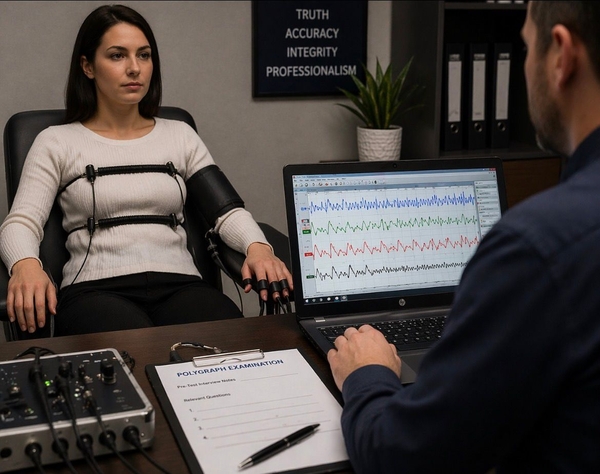
At the core of a polygraph examination is the measurement of physiological responses. These typically include respiration, cardiovascular activity, and electrodermal responses (skin conductivity). When an individual is asked carefully constructed and relevant questions, the body can exhibit measurable changes associated with psychological stress. These responses are recorded and later analysed by the examiner.
However, the value of the process lies not just in the instrumentation, but in the expertise of the examiner. Crafting appropriate questions, maintaining neutrality, and ensuring the examinee understands the process are all critical components. The examiner must also establish a calm and professional environment, as the goal is to obtain accurate and consistent data not to create anxiety or confusion.
In private matters, such as relationship concerns, family disputes, or allegations without clear evidence, a polygraph examination can serve as a tool to support decision-making. It provides an additional layer of insight when accounts differ and trust has been compromised. Importantly, the outcome is not presented as absolute proof, but as a professional opinion based on observed physiological patterns.
Another key aspect of the examiner’s role is ethics. Participation in a polygraph examination is voluntary, and individuals must provide informed consent. The process is confidential, and the examiner is responsible for handling all information with discretion and professionalism. This is particularly important in private cases, where reputations, relationships, and emotional wellbeing are often at stake.
It is also worth noting that a polygraph examination is not a standalone solution. Rather, it should be viewed as part of a broader approach to resolving issues, complementing communication, mediation, or, where necessary, legal advice. Its strength lies in helping to move a situation forward when it has reached a point of uncertainty or stalemate.
Ultimately, the role of a polygraph examiner is to assist, not to judge. By providing a structured and evidence-informed process, they help individuals and families gain clarity in situations where the truth may otherwise remain obscured.
For those seeking professional and confidential polygraph services in private matters, further information can be found at:
https:www.lies2light.co.uk
In challenging personal situations, having access to a fair and objective process can make the difference between ongoing uncertainty and a clearer path forward.