


Lie Detector Solihull Coventry and Rugby
Tuesday 14th October 2025
JE
5 Burning Questions Everyone Asks About Lie Detector Tests
Have you ever wondered what really happens during a lie detector test? Polygraph examinations are often portrayed dramatically in movies, leading to a lot of confusion and anxiety. While they are the most frequently used process in truth verification, the public's primary concerns centre on these five critical questions:
1. How Accurate Are They, Really? (The Reliability Question)
The most frequent concern is accuracy. Research typically places polygraph reliability in the 80% to 90% range, but this depends heavily on the specific protocol, the technique used, the complexity of the case, and the skill of the examiner. It’s not an exact science, which leads directly to the next point.
2. Are Polygraph Results Admissible in Court? (The Legal Question)
This concern is tied to reliability. Since the scientific foundation is often inconsistent, polygraph findings are generally not admitted as legal evidence in court in many countries. They are typically used for investigatory or internal purposes only.
3. What Exactly Does the Machine Measure? (The Mechanism)
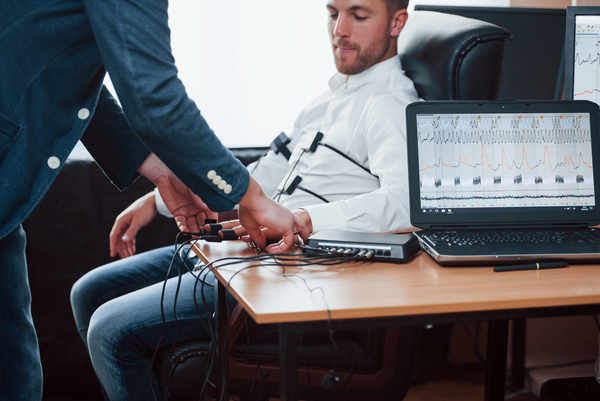
The machine does not have a "lie" sensor. Instead, it tracks involuntary physiological responses—heart rate, breathing, blood pressure, and skin conductance (sweating). It measures the stress associated with potential deception, not the lie itself.
4. Can You 'Beat' the Test Using Countermeasures?
People often ask about cheating or using countermeasures to manipulate their physical responses. While examiners are trained to detect these tactics, the possibility remains a primary scepticism and a significant challenge to the test’s integrity.
5. Can Nervousness or Meds Cause a False Fail? (Preparation and External Factors)
Test-takers always inquire about external factors. Since the polygraph is measuring stress, many worry that extreme nervousness, fatigue, or prescription medication might unintentionally cause a truthful person to exhibit deceptive physiological responses and ultimately fail the exam.
The Bottom Line
The polygraph remains a prominent, albeit controversial, tool in truth verification. The key takeaway is that the process measures stress, not intent, emphasizing that the test must be administered in a professional, controlled testing environment to yield the most reliable results possible.